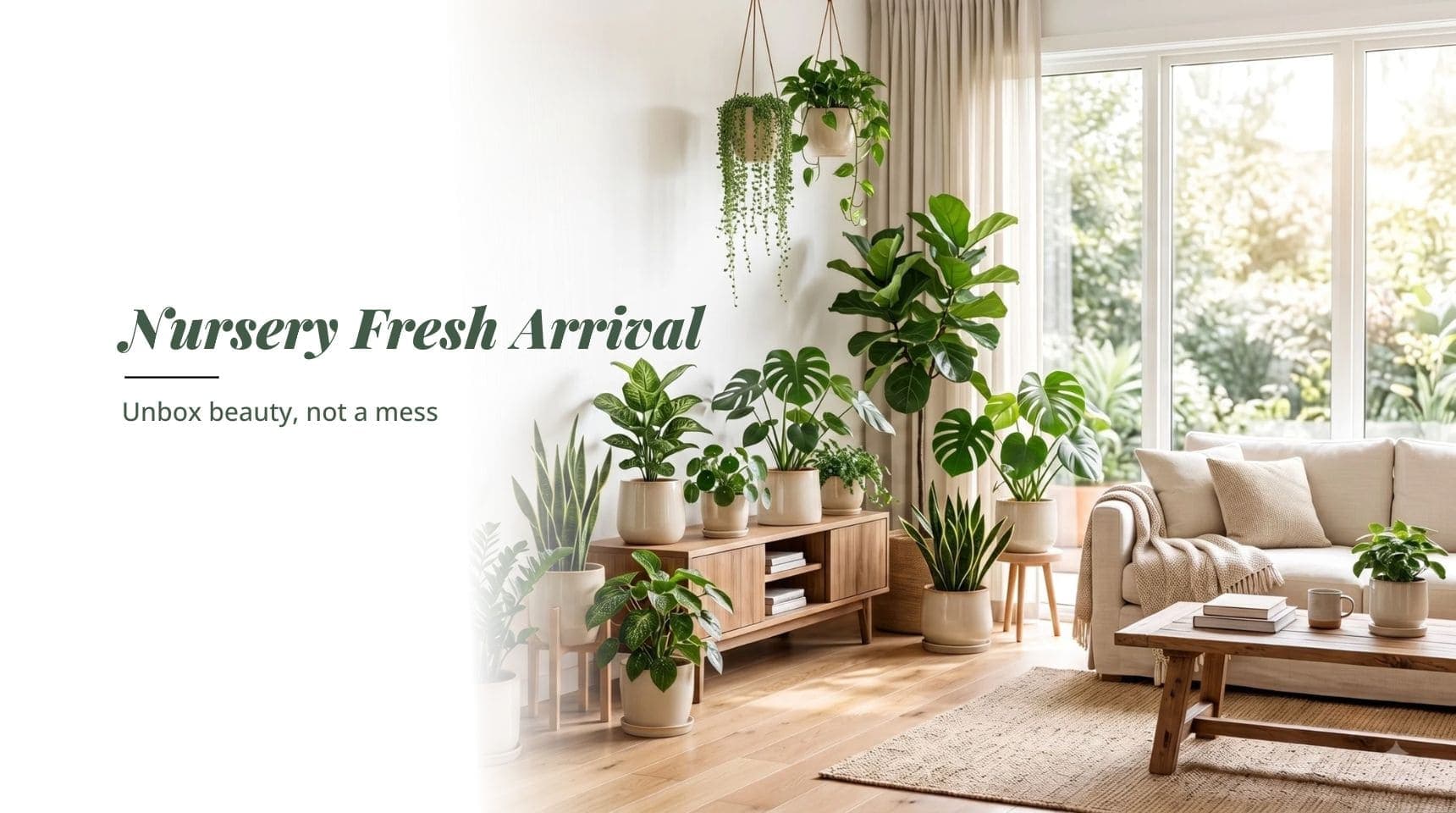
Order a plant online and you already know how the story usually goes. It sits in a warehouse for a few days, gets boxed by someone who's never grown anything, rides in a delivery van for a week, and shows up with half its leaves gone and its soil spilled across the box. You spend the next month nursing it back to health, if it survives at all.
We started Paudhey because that experience shouldn't be the default. We partner directly with a working nursery instead of running a warehouse, which means every plant we ship was, until very recently, still growing in soil rather than sitting in storage. But a good nursery partnership only solves half the problem — the other half is what happens between the moment a plant leaves the nursery and the moment it reaches your door. That's the part most online plant sellers get wrong, and it's the part we've spent the most time getting right.
This post is the long version of what "nursery-fresh, delivered anywhere" actually means at Paudhey — the packaging, the potting, the grading, and the guarantee behind every order.
Why most online plant deliveries fail
Plants aren't like most things you order online. A phone case doesn't care if it spends four days in a hot delivery truck. A living plant does. Three things typically go wrong in transit, and each one has a specific, preventable cause:
- Root shock — the soil shifts and compacts during transit, crushing or exposing fine roots that were never designed to survive outside a stable pot.
- Dehydration — most courier networks weren't built for anything time-sensitive, and a plant that goes several days without water starts wilting well before it reaches you.
- Physical damage — standard cardboard boxes flex and crush under stacking, snapping stems and shredding leaves that had no cushioning to begin with.
None of these are really about "long distance" being inherently dangerous for plants. They're about generic packaging built for boxes, not living things, being asked to do a job it was never designed for.
A plant doesn't fail in transit because the distance was too far. It fails because the box wasn't built for something that's still alive.
How we pack: the science of a breathing box
This is the part of the process most customers never see, so it's worth explaining properly. Every Paudhey order ships in a proprietary breathing box — not a generic cardboard carton with air holes punched in, but a structure specifically engineered around how a plant behaves once it's sealed inside a moving vehicle for two to five days.
Three things happen before a single plant goes into that box:
Soil-locking molds. Loose potting mix is the single biggest cause of transit damage — it shifts with every turn the delivery vehicle takes, and that movement is what snaps roots and topples stems. We use custom molds that lock the soil surface in place around the base of the plant, so the root ball stays exactly where it was packed from pickup to delivery, no matter how many times the package gets loaded, stacked, or turned during handling.
Pre-hydrated root pods. A plant that's thirsty when it leaves the nursery is a plant that's stressed by the time it arrives. We pre-hydrate the root zone before sealing the box, giving each plant enough of a water reserve to comfortably outlast the delivery window without drying out — even on routes that take the full five days.
Ventilation calibrated to the box, not guessed at. Too little airflow and humidity builds up, inviting rot and fungal issues. Too much and the plant dries out faster than the water reserve can compensate for. We've tuned the ventilation pattern in our packaging specifically for the box dimensions and typical transit times we ship on, rather than using a one-size-fits-all air hole pattern.
The result is what we mean by "unbox beauty, not a mess": a plant that looks, days later, essentially like it did the moment it was packed — upright, hydrated, and with its root system undisturbed.
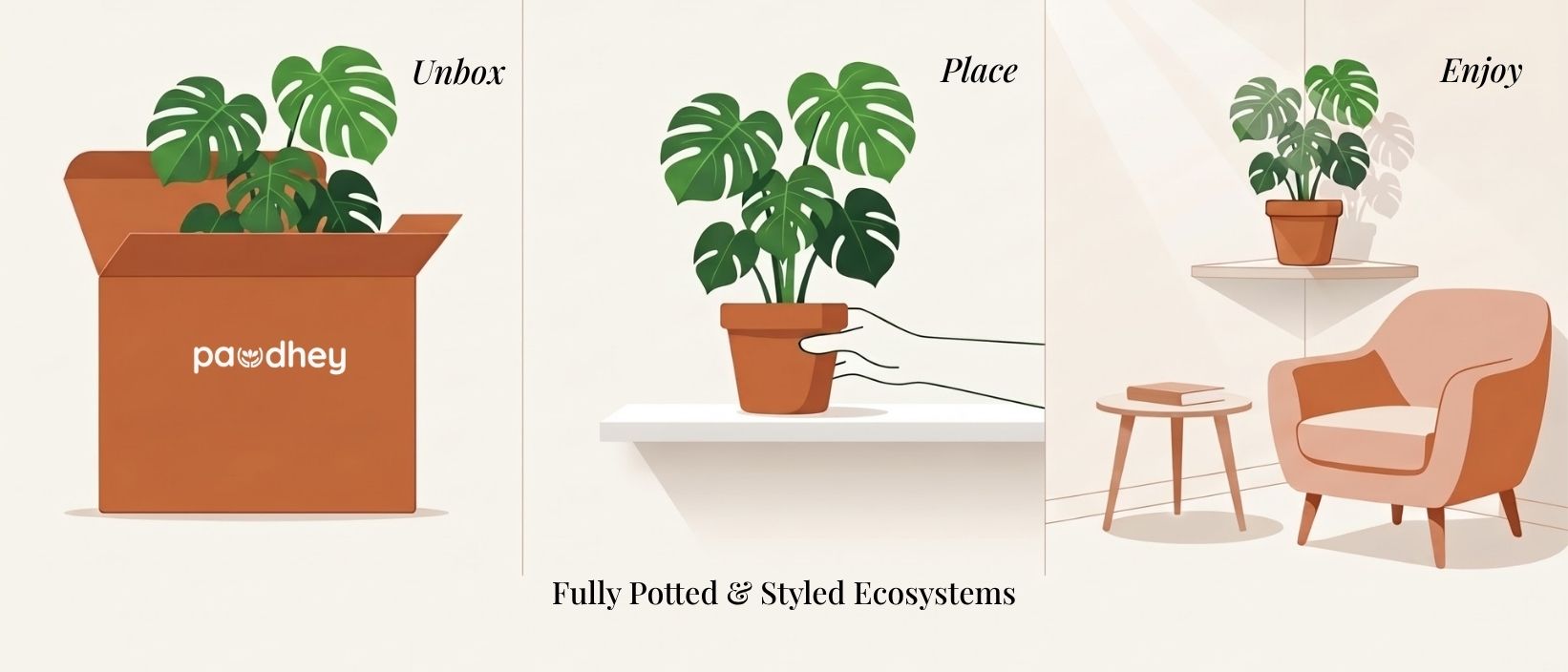
No repotting, no shock: how we pot and grade every plant
Packaging only protects a plant that was healthy and properly prepared to begin with. So before anything gets boxed, every plant goes through a quality grading and potting process designed to remove the two most common causes of new-plant stress: bad soil and light shock.
Quality grading. Not every plant in a batch is dispatch-ready. We grade for structural health — even branching, no pest activity, no leaf damage, a root system that's established but not root-bound — before a plant is approved to ship. Plants that don't meet the bar stay at the nursery to recover or grow on, rather than going out the door.
Custom aerated potting mixes. Standard nursery growing mix is often too dense and too moisture-retentive for how most people actually keep plants at home — indoors, or on a balcony, without the drainage a nursery bed has. We repot into a custom aerated mix before dispatch, one built to drain well and resist compaction, so the plant that arrives is already growing in the medium it needs long-term, not one it'll need to be moved out of in a few weeks.
Light conditioning. A plant grown under full nursery sun and then placed straight into a dim living room goes through real shock — leaves yellow, drop, or scorch as it tries to adjust. We condition plants meant for indoor or balcony placement to lower light levels before they ever leave the nursery, so the light in your home isn't a shock to adjust to, it's simply what the plant is already used to.
That's the whole idea behind "no repotting, no shock." The plant that arrives at your door isn't a nursery plant that now needs to be adapted to your home — it's already been prepared for it.
We don't stop at delivery
A lot of plant sellers treat the sale as the finish line. We think that's backwards — the moment a plant arrives is when the part that actually matters to you begins. Every Paudhey order comes with ongoing support, not just a one-time transaction:
- A survival guarantee. If a plant arrives damaged or doesn't make it despite reasonable care, reach out to us and we'll make it right. We'd rather replace a plant than have you give up on it.
- Watering schedules built for your specific plant. Different species have wildly different watering needs, and "water once a week" is bad advice for half of what we sell. We provide guidance specific to the plant you ordered, not a generic one-size-fits-all card.
- Diagnostic help when something looks off. Yellowing leaves, drooping stems, spots that weren't there last week — these usually have a specific, fixable cause. Reach out to us and we'll help you figure out what's actually going on before you assume the worst.
We don't just sell plants — we make sure they thrive in your space, and that support doesn't expire the day your order arrives.
Your first 48 hours: a short unboxing guide
Since packaging and potting only get a plant to your door in good shape, here's how to keep it that way once it's out of the box:
- Unbox as soon as it arrives. Even a well-hydrated plant shouldn't sit sealed in a box longer than necessary — open it the same day and let the plant get some light and airflow.
- Don't water immediately. Because every plant ships pre-hydrated, check the soil moisture before adding more. Overwatering a plant that's already well-hydrated is a more common mistake than underwatering one.
- Skip direct harsh sun for the first few days. Even light-conditioned plants benefit from a short adjustment period in bright, indirect light before moving to their permanent spot.
- Leave it in the nursery pot for a week or two if you plan to repot. Since the plant is already in an aerated, well-draining mix, there's no urgency — let it settle into your home's conditions first.
- Expect a little leaf drop, but not collapse. One or two leaves adjusting to a new environment is normal for most plants. Widespread wilting or collapse is not — that's exactly what our post-care team is there to help diagnose.
Frequently asked questions
Do you deliver pan-India, or only certain cities? Pan-India. Delivery typically takes 2-5 business days depending on your location, and it's shown at checkout before you place your order.
What happens if my plant arrives damaged? Contact us with a photo of the plant as it arrived. If it's arrived damaged or in poor health despite our packaging, we'll work with you on a replacement — that's what our survival guarantee is for.
Do I need to repot my plant right away? No. Every plant ships already potted in a custom aerated mix suited for indoor or balcony conditions, so there's no urgency to repot on arrival.
How is this different from other online plant sellers? Most online plant sellers ship out of a warehouse in generic packaging. We work directly with a nursery, use purpose-built breathing-box packaging with soil-locking molds and pre-hydrated root pods, and grade and light-condition every plant before it ships — rather than treating packaging as an afterthought.
What if I don't know how to care for the specific plant I ordered? That's what our post-care support is for. Every order comes with watering guidance specific to that plant, and you can reach out any time if something looks off.
Is there a minimum order for pan-India delivery? No — pan-India delivery applies to individual orders, not just bulk or wholesale purchases.
We're still growing, in more ways than one — more plant varieties, more delivery regions, and more ways to make sure whatever arrives at your door actually thrives once it's there. Thanks for being part of it early.